Preventive Care
Hearing and Vision Screening in Princeton, NJ
Are you concerned about changes in your child’s hearing, your vision, or your overall sensory health?
At Jersey Family Health, we provide hearing and vision screenings as part of comprehensive preventive care for children and adults in Princeton, NJ. Our physicians evaluate changes early, identify potential concerns, and help guide you toward the appropriate next steps when additional evaluation is needed.
Through our Direct Primary Care Membership approach, patients receive consistent preventive care support, personalized guidance, and a stronger relationship with their physician.
Why Hearing and Vision Screenings Matter
Hearing loss and vision changes are among the most common health issues in the United States and among the most commonly ignored. Both tend to develop gradually, which means most people adapt to the changes without realizing how much their quality of life has already been affected.
In children, undetected hearing or vision problems directly affect language development, academic performance, and social confidence. In adults, untreated hearing loss is associated with cognitive decline, social isolation, and depression. Uncorrected vision problems increase the risk of accidents, falls, and missed signs of serious eye conditions like glaucoma or diabetic retinopathy.
Hearing and Vision Screening at Every Age
The importance of hearing and vision screening does not diminish with age — it shifts. Here is what we focus on at each life stage.
Children and Teens
Early detection is critical. Hearing and vision problems in children directly affect learning, development, and confidence.
- Hearing screening during well-child visits for ages 10 and up and repeated at key developmental checkups
- Vision screening at well-child visits for ages 10 and up
- Screening for signs of amblyopia (lazy eye) and strabismus (crossed eyes)
- Assessment of school-related complaints — squinting, headaches, difficulty reading
- Referral to pediatric audiologist or ophthalmologist when findings are present
Young Adults (18–39)
Young adults often underestimate hearing and vision changes — dismissing them as tiredness or distraction.
- Baseline vision screening to establish a reference point
- Hearing screening for those with occupational noise exposure or frequent headphone use
- Assessment of digital eye strain — headaches, dry eyes, blurred near vision
- Referral for corrective lenses, contact fitting, or audiological evaluation when indicated
Adults (40–55)
Age-related changes in near vision and early hearing loss commonly begin in this decade — often before patients are aware.
- Vision screening for presbyopia — the gradual loss of near focusing ability after 40
- Early hearing loss screening — particularly for those in noisy work environments
- Monitoring for vision changes associated with diabetes and hypertension
- Referral to ophthalmologist for full eye exam including glaucoma and retinal health
Adults 55 and Older
Hearing and vision decline accelerates after 55 and becomes a significant factor in safety, independence, and cognitive health.
- Annual hearing screening — age-related hearing loss affects 1 in 3 adults over 65
- Vision screening for cataracts, macular degeneration, and glaucoma risk
- Fall risk assessment — poor vision is a leading contributor to falls in older adults
- Assessment of cognitive impact — untreated hearing loss linked to increased dementia risk
- Prompt referral to audiologist or ophthalmologist for specialist evaluation and treatment
What Is Included in Our Hearing and Vision Screenings
Our in-clinic screenings are designed to identify red flags and changes that warrant further attention quickly, conveniently, and as part of your regular preventive care visit.
Our in-clinic hearing screening evaluates your ability to detect sounds at different frequencies and volumes. We assess for signs of hearing loss, ask about symptoms such as ringing in the ears (tinnitus), difficulty following conversations, or needing to increase volume on devices. Patients with abnormal screening results are referred to an audiologist for comprehensive hearing testing and follow-up.
Our in-clinic vision screening assesses visual acuity how clearly you can see at near and far distances as well as color vision when relevant. We evaluate for signs of refractive errors such as nearsightedness, farsightedness, and astigmatism. We also ask about symptoms including blurry vision, eye strain, headaches, or difficulty reading. Patients with significant findings are referred to an ophthalmologist or optometrist for a full eye exam and corrective care.
We review your complete health history for conditions that commonly affect hearing and vision including diabetes, hypertension, autoimmune conditions, and certain medications known to be ototoxic or harmful to vision. This context is critical for interpreting screening results accurately and determining appropriate next steps.
Our in-clinic screenings are a first step — not a replacement for full diagnostic evaluation by an audiologist, ophthalmologist, or optometrist. When a concern is identified, we provide a timely, coordinated referral and communicate your health history to the specialist directly. You do not have to navigate that process alone.
When Should You Schedule a Hearing or Vision Screening?
Meet Your Physicians

Why Choose Jersey Family Health for Hearing and Vision Screening?
Screenings Built Into Your Preventive Care
Hearing and vision screenings are not an afterthought at Jersey Family Health — they are a standard part of your preventive visit. You do not need a separate appointment or a separate referral just to get screened.
Two Board-Certified Physicians
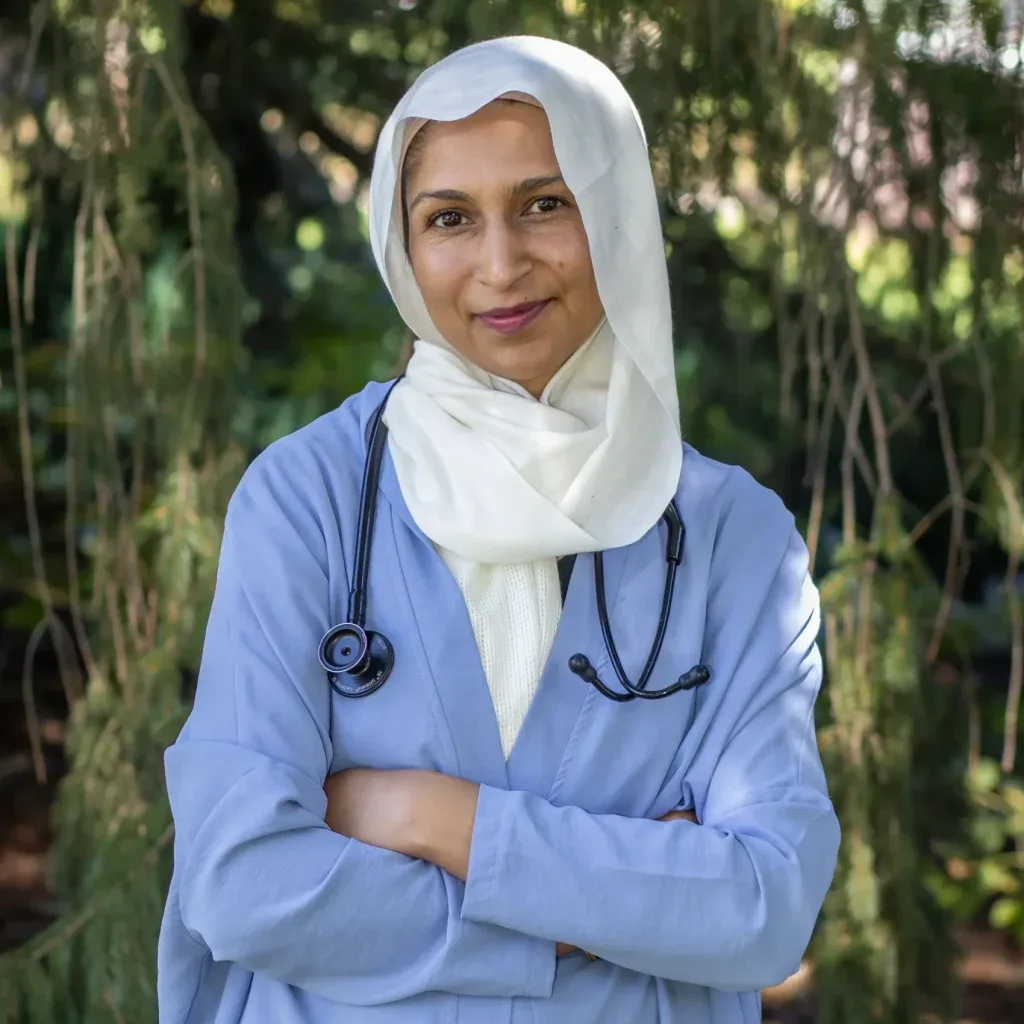
Both Dr. Salman Saad, MD and Dr. Moizah Saad, DO conduct hearing and vision screenings for patients ages 10 and up — from pediatric well-child visits through adult and senior preventive care.
Coordinated Specialist Referrals
When a screening identifies a concern that needs further evaluation, we manage the referral to an audiologist, ophthalmologist, or optometrist directly — communicating your health history so the specialist has full context from the start.
Whole-Patient Context
We do not look at hearing and vision in isolation. We review your full health history — including chronic conditions like diabetes and hypertension that directly affect sensory health — to make sure screening results are interpreted accurately and in context.
Telehealth Available Across Three States
Jersey Family Health is a licensed telehealth provider in New Jersey, New York, and California. While in-person visits are required for screenings, follow-up consultations and care coordination can be handled via secure virtual visits — wherever you are in those three states.
Personalized Preventive Care Through Membership
Our Direct Primary Care Physician approach helps patients receive consistent preventive care with a stronger relationship with their healthcare provider.
Through our Direct Primary Care Membership, patients receive ongoing physician support, easier communication, and coordinated care when additional evaluation or specialist referrals are needed.
Do Not Wait Until You Notice a Problem. Get Screened Now.
Hearing and vision changes often develop gradually, which is why routine screenings are an important part of preventive healthcare. At Jersey Family Health, our physicians help identify concerns early, explain results clearly, and guide patients toward the right next steps. Through our Direct Primary Care Physician approach, patients receive ongoing support and a healthcare relationship focused on prevention and long-term wellness.
Frequently Asked Questions
Q1: What does a hearing screening at your clinic involve?
Our in-clinic hearing screening evaluates your ability to detect sounds at various frequencies and volumes. We also review symptoms such as tinnitus, difficulty following conversations, or needing to increase device volume. If the screening suggests hearing loss, we refer you to an audiologist for comprehensive diagnostic testing.
Q2:What does a vision screening at your clinic involve?
Our in-clinic vision screening assesses visual acuity at near and far distances, color vision when appropriate, and symptoms such as blurry vision, eye strain, or headaches. If significant changes are found, we refer you to an ophthalmologist or optometrist for a full diagnostic eye exam and corrective care.
Q3: Is a hearing and vision screening the same as a full hearing or eye exam?
No. Our in-clinic screenings are preventive tools designed to identify changes and flag concerns that need further evaluation. A full diagnostic hearing test requires an audiologist, and a comprehensive eye exam requires an ophthalmologist or optometrist. We provide the screening and manage the referral when specialist care is needed.
Q4: How often should children have hearing and vision screenings?
At Jersey Family Health, hearing and vision screenings are available for ages 10 and up during annual well-child visits. If your child’s school has flagged a concern or you have noticed changes in their behavior, reading, or attention, schedule a screening sooner.
Q5: Can diabetes or high blood pressure affect my hearing and vision?
Yes. Both diabetes and hypertension can cause significant damage to the blood vessels that supply the ears and eyes. Diabetic retinopathy is a leading cause of blindness in adults, and hypertension can contribute to vision loss and hearing changes. We factor in your full health history when reviewing your screening results.
Q6: Can I schedule preventive screenings without insurance?
Yes. Through a Direct Primary Care Membership, patients can access preventive healthcare support through a membership-based approach.
Q7: How does direct primary care support preventive screenings?
Direct Primary Care allows patients to maintain a consistent relationship with their physician while receiving preventive care guidance, screenings, and ongoing health support.
Q8: What are the benefits of membership-based preventive care?
Membership-Based Primary Care provides patients with easier access to their physician, personalized care planning, and better continuity for preventive healthcare.